
Join our mailing list
Sign up to our E-Newsletter Now!
Search the website


An Taoiseach Leo Varadkar with ChildFund CEO Michael Kiely, Camogie CEO Joan O’Flynn, and Emilia Bennis (8) clutching our mascot at the Camogie Senior Final in Croke Park, Dublin. Photo Credit: Eleanor Collier
Dublin, September 11, 2017: Brian Mac Neill
Wow, what an extraordinary finish to a brilliant game of camogie yesterday as Cork edged out Kilkenny in a thrilling finale to the camogie season. Huge congrats to Cork on their magnificent achievement, particularly to our ambassador Aoife Murray, demonstrating again what an absolutely peerless professional she is. Commiserations too to Kilkenny who pipped Cork in last years final and came very close to doing so for the second successive year.
While camogie was undoubtedly the main event, the final also presented an opportunity for ChildFund to meet with distinguished dignitaries, and to explain why our partnership with the Camogie Association continues to go from strength to strength. We were delighted to speak to An Taoiseach Leo Varadkar and Uachtarán na hÉireann Michael D Higgins to talk about our Dream Bike campaign to help disadvantaged girls in the developing world.

An Taoiseach Leo Varadkar and ChildFund Board Director Eleanor Collier with Joan O’Flynn, Ard Stiurthoir of the Camogie Association (centre) at the 2017 Camogie Senior Final, Croke Park, Dublin. Photo Credit: Eleanor Collier
The campaign has simple objective; to provide bikes to girls who have to otherwise undertake long and often dangerous journeys by foot, just to attend school and get home safely. Long distances can interrupt or destroy the chances of children obtain a good education, often their only route out of poverty and disadvantage. This has particularly important ramifications for girls, often marginalised, discriminated against, or victims of gender based violence in their communities. It takes just €100 to buy a bike a change a life. The gift of a bike can be help girls attend school regularly and get home before sundown. Such a small thing can have such powerful and lasting positive impact. http://www.childfund.ie/dream-bike/
A huge thank you to our colleagues at the Camogie Association for looking after us so well on the day. A special note of appreciation too for little Emilia Bennis (8) who did such a brilliant job representing ChildFund on the day and reminding everyone of what our work is all about - children. Thanks Emilia for taking such good care of our mascot!

Emilia Bennis (8) representing ChildFund Ireland, the official charity partner of the Camogie Association, pictured here with President Higgins at the Camogie All Ireland Final 2017, Croke Park, Dublin. Photo Credit: Eleanor Collier
Please support our Dream Bike campaign for girls today. It takes just €100 to buy a bike and change a life http://www.childfund.ie/dream-bike/
ChildFund Ireland
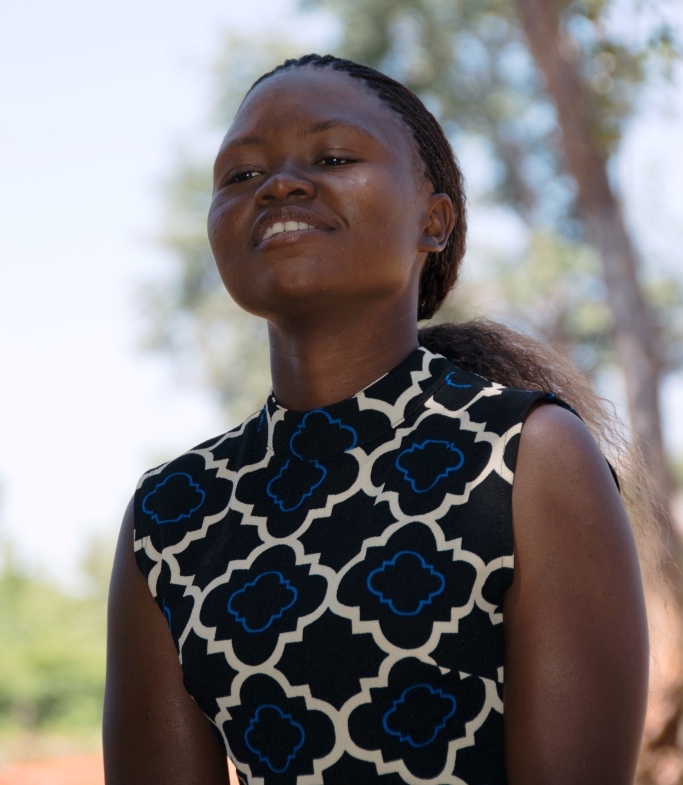
Misozi, Zambia 2017 - Photo Credit Diana Quick
Dublin April 21st, 2017
Misozi is a bright and ambitious 21 year old woman from the Yapite village of Chikondwelelo community, in Zambia. She lives there with her parents, her two brothers and two sisters. Misozi’s name translated into English literally means ‘tears’, but this story is one of hope. Misozi’s parents are subsistence farmers who have been assisted by one of the numerous projects ChildFund implements, designed to promote food security and increase household income - the Luangwa Agriculture Integrated Project (LIAP). This is really essential and important work in the developing world where many families remain reliant on the harvest from crops to feed their family, and also to generate family income. Severe drought has afflicted many countries in Eastern and Southern Africa over the last 18 months, including parts of Zambia, emphasising why projects like LIAP are so important. The project benefits 1,500 households like Misozi’s in the Luangwa district of the country.
With families so geared by necessity towards food security and the daily sourcing of clean water, the prioritising of children’s education is difficult and can sometimes fall by the wayside. The thought of a child from these modest communities advancing to third level education, obtaining a good job and a reasonable income, can often feel like a mountain too high to climb…almost like a pipe dream. That is what makes Misozi’s story so special and why her journey to becoming a full time teacher, and indeed the thwarting of that dream, would have been so cruel.
On our visit to Chikondwelelo in March we learned that after overcoming so many hurdles in her life just to complete her primary and secondary level education, Misozi’s journey was in danger of coming to an abrupt and heart-breaking end. After an initial one year of training to become a teacher, and with three more ahead, money had simply run out. Her family and wider community just could not afford to support her ambitions. This would have been a cruel injustice for any aspiring student anywhere but especially so perhaps for a young woman of the developing world who has had to overcome so many hurdles just to be in this position.
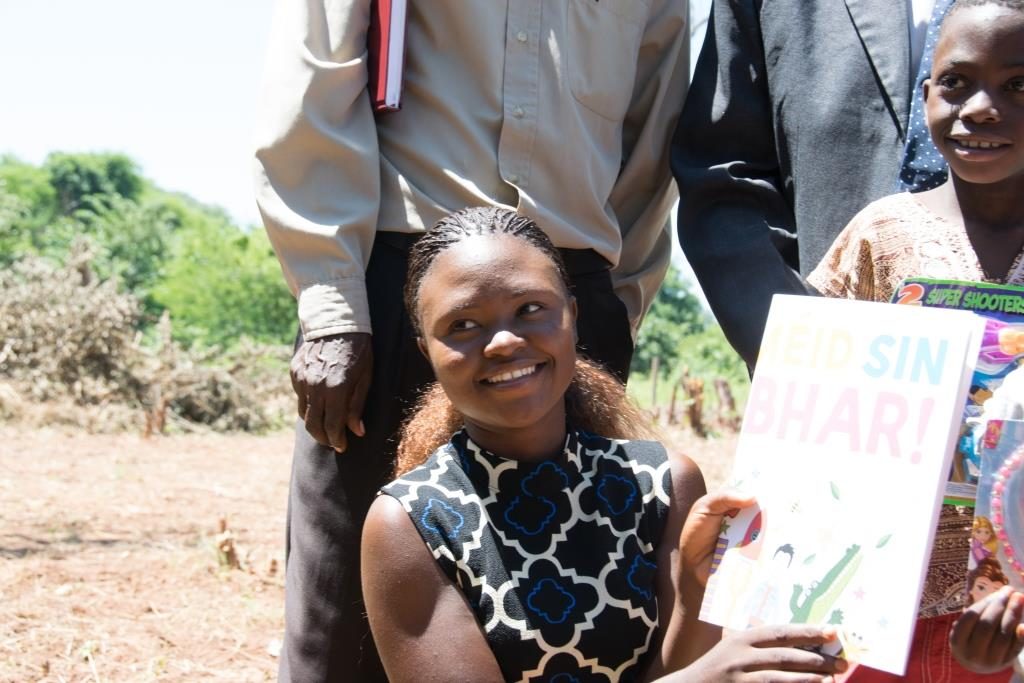
Misozi cant wait to start her professional life as a teacher. Zambia, March 2017: Photo Credit Diana Quick
Despite many years working in the international development sector, witnessing the many difficulties people in impoverished communities have to overcome; Misozi’s story moved our CEO Michael Kiely so much he pledged there and then to do something about it. This entailed talking to six close friends in Ireland about collectively assuming the financial responsibility for Misozi’s tuition fees, for the remaining three years of her college life. On returning to Ireland and discussing the matter, he found that little deliberation was needed. These close friends were eager to do something to help Misozi and did not hesitate to get involved. The consequence of this intervention for Misozi and her family could be profound. In May she will be starting her three year stint at the Chongwe College of Further Education knowing that, subject to academic performance, her future as a teacher is secured. In the developing world, the completion of third level education for people in remote, rural communities who have so many obstacles to overcome is a considerable achievement. It represents not just a personal achievement, or an achievement for the family to be proud of, rather, it is also an achievement that will be celebrated by the whole community, proud and delighted to see one of their children progress.
A new school is at an advanced stage of development in Chikondwelelo and when it opens it is hoped that Misozi will teach there - in her own community - to her own people. This is her dream and thanks to the Intervention of Michael and his Irish friends, this dream looks set to become a reality.
You too could intervene in the life of a family in the developing world and make a real, measurable and lasting difference toward improving their lives by becoming a child sponsor today. Child sponsorship can have a profound and widespread impact on people’s lives. It assists, not just the child themselves but also their families and even the wider community where they live. It’s designed to help families prioritise children’s needs and give them the best platform to succeed in life by removing some of the practical obstacles in their path.
Learn more about our Child Sponsorship programme here http://www.childfund.ie/sponsor-introduction/
Learn more about ChildFund’s work in Zambia by visiting http://www.childfund.ie/what-we-do/where-we-work-2/zambia/
ChildFund Ireland

Eoin Colfer and Sasha Lorigan at the book signing event in the Carnegie Library: Dublin, March 3rd.
Dublin, March 7th, 2017 : Brian Mac Neill
ChildFund would like to extend a warm debt of gratitude to the hugely talented and globally renowned author Eoin Colfer for giving his time to support our work last Friday. Eoin is a long time supporter of ChildFund and sponsors a number of children through our organisation. One of those children is a twelve year old girl from Zambia called Loveness who has been sponsored by Eoin since she was just a little girl.
The event on Friday was titled ‘A Books Journey from Dublin to Zambia’. The significant book in question was signed by Eoin and will be brought to Loveness’s project in Zambia by Michael Kiely, CEO of ChildFund, and Sasha Lorigan (pictured above). Sasha (15) has worked tirelessly to encourage donations of children’s books, toys and stationary items for other disadvantaged children in Zambia.

Eoin, Sasha and Michael hold books donated for children in Zambia: Dublin, March 3rd, 2017

Eoin Colfer signs a book for his sponsored child Loveness (12) from Zambia. Dublin, March 3rd, 2017
ChildFund would again like to sincerely thank Eoin Colfer, Sasha Lorigan, and the staff of the Carnegie Library in Blackrock, Co Dublin for assisting in this event.
Read more about Eoin Colfer here: http://www.eoincolfer.com/
Read more about our child sponsorship programme here: http://www.childfund.ie/sponsor-introduction/sponsor-a-child/
ChildFund Ireland

Fatuma-takes-her-4-month-old-daughter-Asanti-to-an-ECD-centre-in-Fantale-Ethiopia.-Photo-Credit-Jake-Lyell
ChildFund’s work in ECD is as much about educating parents on issues affecting children’s essential physical, cognitive and social development as it is about creating a nourishing environment in which children can thrive. Here’s another chance to read an insightful piece from ChildFund International’s Christine Ennulat on this hugely important topic
Christine Ennulat: ChildFund International
“There isn’t a parent in the world who doesn’t want the best for their children,” says Mary Moran, an early childhood development specialist.
Then she provides a tough example. “A mother tried to give me a baby in Senegal,” she recalls. “The baby was severely malnourished, and the mother looked like she might not be there the next week. She asked me, ‘Will you take her? I want her to live.’”
Moran responded by telling her — and showing her — how important she was to her baby. “The cry of a malnourished child is hard to hear,” Moran explains. “You can help mothers recognise children’s behaviours for what they might mean rather than how noxious those behaviours are. You can help people understand what calms their kids. Most mothers are not conscious that their children recognise their voices. When you frame that for a parent — ‘Look at how she recognises your voice. You’re so important to her!’ — it helps.”
Illumination of this sort — teaching a mother how to “read” her baby, even at such an early age — goes to the heart of how ChildFund helps parents take hold of their essential role in early childhood development: helping those children achieve their full potential. A healthy, engaged parent-child relationship is essential during the developmental stages of children.
A 2011 two-article series in the medical journal The Lancet cites early childhood development as a global concern. According to the series, a child growing up in extreme poverty faces an array of risks to their development: malnutrition, stunted growth, poor brain development, inadequate developmental stimulation, maternal depression, exposure to violence and more. The articles also cite interventions that can protect children from these risks, including breastfeeding, maternal education, good interaction with caregivers and stimulating physical and social environments.
“The most powerful thing you can do is teach people child development,” says Moran. It makes an enormous difference when parents understand the importance of early childhood development, how their children acquire the skills they will need to become independent, how the skills build on one another, and what the goals are. And, Moran adds, it’s not necessary to teach early childhood development in great depth; it’s more important that it happens than how it happens.
But, she says, “It matters that you act early.” She invokes neuroscience to explain why. “In those first six years, neural pathways are generated constantly — connections between cells in the brain. More experience equals more connections,” she says. “It’s a critical period. Children lose capacities because they’re not stimulated.”
So, in the countries where we work, in addition to supporting health care and nutrition for children, ChildFund trains not only parents but also community volunteers and teachers about the physical, social and cognitive development processes of the earliest years. Early childhood education focuses on how to provide a quality of experience that supports these processes, as well as how to identify delays and barriers to a child’s development.
But, Moran emphasises, “Education is most effective when it’s paired with support.”
ChildFund builds this wisdom into its early childhood development programs worldwide. Parenting support groups provide opportunities for caregivers to share successes as well as to ask each other, “Isn’t this hard?” Early Childhood Development centers, in addition to providing an environment specifically designed to stimulate children’s development, serve as a shared hub around which community members can network. Trained volunteers teach early childhood development to parents in home visits, helping families build strong relationships and practice new ways of enriching a child’s experience.
“The most successful home visitors are people who act like friends,” says Moran. “They accept who you are, care about what you say, listen reflectively.”
In Honduras, volunteers known as “guide mothers,” like Merlissa, conduct the home visits. One bright afternoon in the village of Lepaterique, Merlissa steps into the cool, dim interior of 3-year-old Milton’s small home. He’s eager for today’s session, but he waits patiently while she exchanges warm greetings with his mother. Finally, Merlissa opens her special bag and begins to pull out some toys and other odds and ends of her trade.

Just before his session with his guide mother, Milton comforts his baby sister
To start the session, she lays several feet of twine across the dirt floor of the living room. Well-acquainted with what’s expected, Milton walks the length of the line, down and back, head held high. He’s been practising with his mother, who watches from a corner now, bouncing his baby sister and giving him an encouraging smile.
Next, Milton correctly identifies all the animals Merlissa points to in the big picture book she brought. Then he accurately follows some fairly complex instructions on moving a rubber ball and a squeaky toy between a tabletop and shelf underneath. After a few more activities, he shows how well he can feed himself.
After a glowing assessment of Milton’s performance, Merlissa begins working with the baby. Lying on her stomach on a blanket, the 4-month-old lifts her head and turns toward the shiny paper Merlissa crackles just out of her view, then follows the sound as Merlissa moves the noise to her other side.
Milton’s family may be poor, but the children’s experience is rich. His mother, with the learning and childcare resources she gets through ChildFund, will continue that enrichment.
She knows how important she is to her children — and why.

Emmanuel sits in his mothers lap, Kigumba, Uganda, June 2016. (Photo credit: Brian Mac Neill /Sharon Ishimwe)
Dublin, 24th November, 2016: Brian Mac Neill
Emmanuel observed the visitors to his tiny home near Kigumba, about three hours drive from Kampala, with some bewilderment. We had come earlier this year to meet the little two year old and hear about the support local health activists trained by ChildFund have been able to provide for Emmanuel and his mother Everlyne at a time when they badly needed assistance. Emmanuel was born with a condition that causes him to have a larger head that his little body can naturally support. This has made life difficult for Emmanuel and of course for his mother too, who is his lone carer with just limited support from a grandmother. Juggling full time care made it really hard for Emmanuel’s mum to cope, leaving both her and Emmanuel in a vulnerable position within the local community. Thankfully help was on hand. Home Health Activists trained by ChildFund’s local partner organisation have a committee that identifies children most at risk within the community, and in need of urgent intervention. They act as support and guidance for the family ,and as interlocutors, mediating bureaucratic channels, connecting children in need to such heath services that are available. Unfortunately, In Emmanuel’s case his condition was not something the nearest (regional) hospital was not equipped to deal with. The Health Activists however, were able to refer Emmanuel’s case to Katalemwa children’s home in Kampala, a dedicated treatment and rehabilitation care-facility supported by ChildFund, that is able to help children with specialist problems like Emmanuel’s. The hospital is renowned for its ingenious orthopaedic workshop where tailor-made appliances and rehabilitation aids are made from locally available materials.
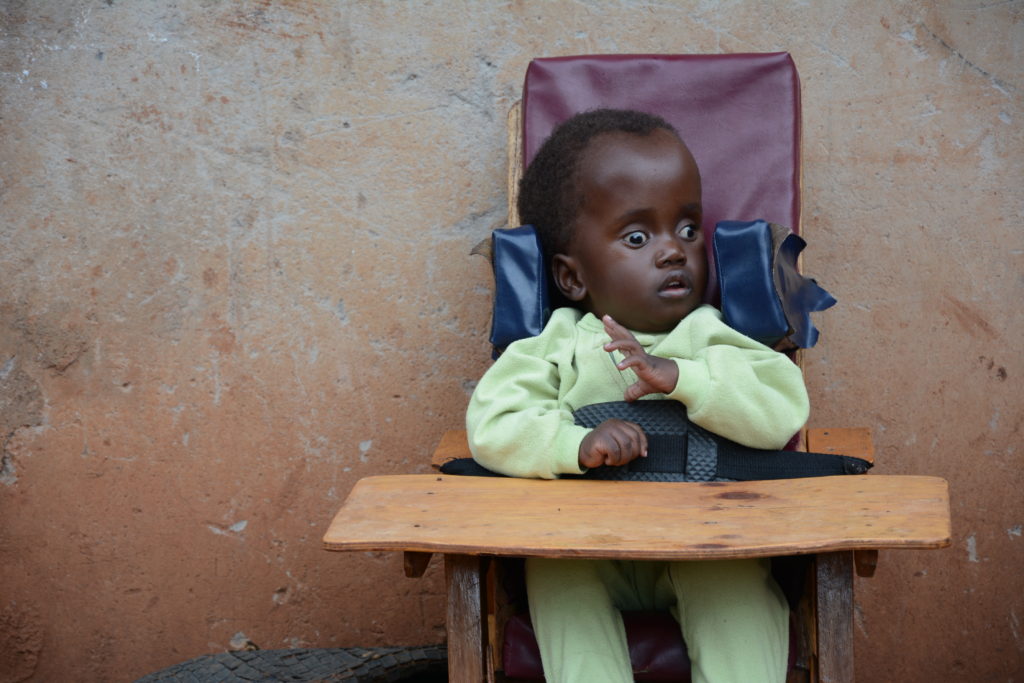
Emmanuel’s chair was constructed at the orthopaedic workshop in Katalemwa Children’s home. (Photo credit: Brian Mac Neill /Sharon Ishimwe)

For Emmanuel’s mum the specially constructed orthopaedic aids have been a huge help in managing his daily care (Photo credit: Brian Mac Neill /Sharon Ishimwe)
After undergoing rehabilitation treatment and consultation with doctors, the orthopaedic team constructed a special chair and a separate device to help Emmanuel stand up while his head is supported, something that is extremely importation for his long term heath and development. It is also hugely important to his mum in enabling her to place Emmanuel in a safe construction(s) that can support his body weight. This intervention has been really important to Emmanuel, ensuring that his body grows correctly. It is hoped that when he is older he will able to walk and support himself ,as his body strengthens. Without proper care to support his physical development, he ran the risk of being an invalid. The new devices have also helped his mother, who can have peace of mind that he is safe while she attends to other matters in the house.
Salva is another boy who has benefited from the Home Heath Activist’s trained by ChildFund. The committee identified his family needed support and intervened to help him. Salva was born with a cleft lip and pallet disfigurement. There is much ignorance about these kinds of disfigurements in rural communities. Ignorance can cause unease which in turn can help fuel discrimination and ostracism, an unpleasant and upsetting thing for any child to have to endure. Its because of ignorance about diseases, disorders and disfigurements, that public awareness campaigns are important. It is also important to let parents know that their children are normal, and that there are sometimes very effective treatments available that can radically improve the child’s condition.

Salva with his sister, outside their family home near Kigumba, Uganda. He had surgery at Katalemwa to correct his cleft lip and pallet. Photo credit: Brian Mac Neill
The Home Heath Committee invited a specialist from Katalemwa to come and speak on local radio to get the message out there across the community that there is no need to be frighted about unusual conditions and that they can be treated. Families will now know they can reach out for help and that there are positive things they can do to help their child. Hearing these issues discussed on radio by an expert lets people know that conditions such as those of Emmanuel and Salva are not abnormal, As well as providing hope, this intervention also helps to soften and ultimately change attitudes towards vulnerable children who have particular medical problems. Increased awareness helps take away the stigmatisation that children sometimes have to endure, and in its place comes optimism, and support. Now that people are aware that many conditions can be treated and that there is help available, its envisaged that more parents of children not already identified, will come forth and avail of assistance. This is one example of the organic way that ChildFund helps empower local communities, in this case by training local heath activists to identify, support and intervene in cases where children need particular help, and by supporting the work of Katalemwa children’s home in its priceless work to improve the lives of children in Uganda.
Find out how you can help support our work here http://www.childfund.ie/get-involved/
ChildFund Ireland

Lydia outside her new dwelling, built with support from an Irish sponsor. June 2016: Photo Brian Mac Neill
Dublin, November 22nd, 2016: Brian Mac Neill
Earlier this year we had the opportunity to visit one of the children to benefit from ChildFund’s sponsorship programme. Lydia, a shy and intelligent girl, is sponsored by a ChildFund Ireland supporter from Co Meath. She lives with her family in the Masindi district of Uganda, some 220km from the capital city Kampala. Calling in to meet Lydia and her family was a real honour, however getting to her family’s residence was not easy! The road to Masindi is a good, paved road that stretches all the way from Kampala. Once we drove off-road however we had to rely on the skilled manoeuvring of our driver who battled gamely in a four wheel drive vehicle through the thick red mud of a road softened by a recent downpour. The sun came out again just as we arrived and It was such a pleasure to finally meet Lydia and her family.

Lydia with her family; June 2016: Photo Brian Mac Neill
Lydia was a little shy on the day we visited, as we asked her to explain what being a sponsor child has meant to her, and her family too. The generosity of one kind Irish sponsor has made such a big difference to the quality of all their lives in this remote part of Uganda. Lydia is proceeding well with her schooling and can have confidence about her educational future and the opportunity perhaps to go to college when she is older. Children who benefit from the support of sponsors have a far greater chance of educational progression than those who do not, and this could be important in helping to support the family when Lydia is older. What Lydia was really proud of though, and was eager to show us, was the brick building in the family compound that has become her own dwelling. The construction of this mini home was only made possible thanks to some additional financial support provided by her generous Irish sponsor. With conditions for the family generally cramped, Lydia, a growing girl, now has her own little domain. Its an important space to help her maintain her study, which is ultimately important for the whole family.
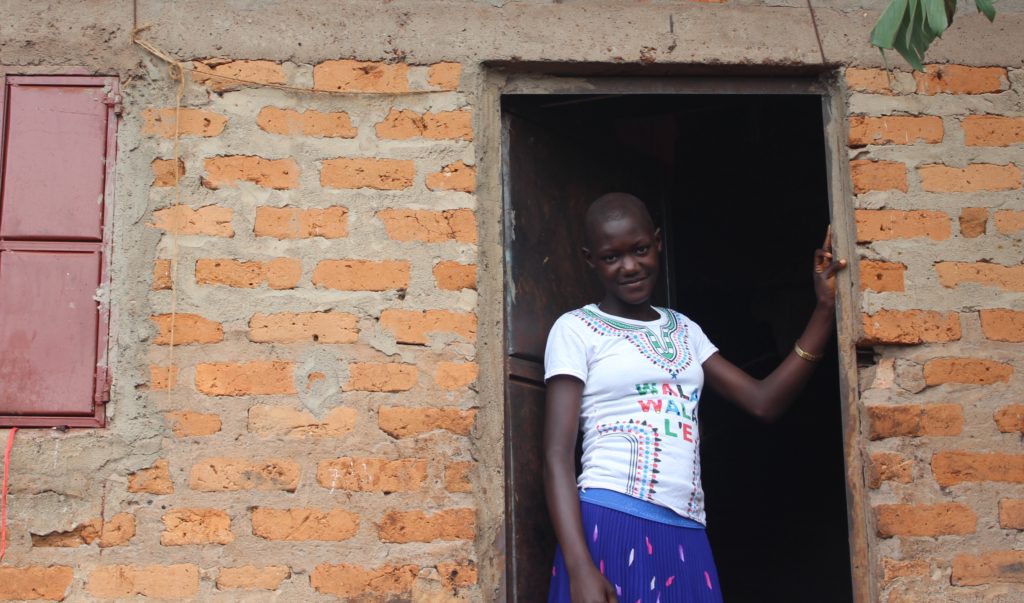
Lydia proudly displays her new dwelling: Photo Brian Mac Neill
Global development work is fundamentally about helping people in small but profound ways to help themselves, and ultimately, to lead sustainable lives. That is what people in the developing world want more than anything, to be masters of their own destiny. They just need a helping hand to get there.
The support of Lydia’s sponsor has enabled the family to buy some Oxen. These animals can be important assets for a family struggling to climb out of systemic poverty. They can be used to plough the fields, allowing crops to be sown. This in turn helps increase the family’s food reserves and their potential income as they sell or barter goods. Thanks to the support of her sponsor, Lydia and her family have been able to buy a crop of land where they grow maize to further improve the family’s ability to feed and sustain itself. The Oxen have come in very handy in cultivating and ploughing this piece of land!
The beauty of the sponsorship scheme is that it benefits not just the child, but also those in the child’s immediate orbit. ChildFund believes that the best way to help vulnerable children thrive is by creating the most supportive and protective environment possible around them. With a good, stable home life and a solid community base that sees neighbours help each other out, the child can best benefit from the direct interventions that sponsorship support brings. In Lydia’s case, the additional support of the sponsor enabled the drilling a local well nearby. Clean water can now be sourced where before only dirty water was available, with all the prospects for dangerous disease that it brings. The local community can also access this well, so while Lydia’s sponsorship support is helping her and her family stay healthy, it is also helping her neighbours too.
Before we left Lydia and her family, Lydia told us she had something special she had prepared to mark the occasion. She insisted on planting a banana tree in honour of our visit. Banana trees are very important plants in Uganda and many people grow these in their gardens. We hope this particular tree grows to be as strong and proud as Lydia, and enjoy a bountiful future.

Lydia plants a three assisted by ChildFund’s Clodagh Byrne: Photo Brian Mac Neill
If this story has touched you, or prompted an interest in our child sponsorship programme - then please, give us a call (01 6762128), write to us (c/o ChildFund Ireland, 22 Windsor Place, Dublin 2), or click the link below and find out more about this wonderful opportunity to directly intervene in the life of a child who could really use your help. Your modest support can be a major foundation stone to help put deserving children like Lydia on the road to a happier life, one filled with greater promise and opportunity.
http://www.childfund.ie/sponsor-introduction/sponsor-a-child/
Thank you
ChildFund Ireland

A health extension worker talks to community members about sanitation and hygiene in Gulele, Ethiopia
By Christine Ennulat, ChildFund Senior Content Manager
Saturday was World Toilet Day 2016, now let’s talk about open defecation.
Sorry if that’s disturbing, but here’s an unpleasant fact: Defecating outdoors, with no privacy, is what “normal” is for one in seven of the world’s people.
According to UNICEF, in 2015, 2.4 billion people did not have access to adequate sanitation facilities, including 946 million people without any facilities at all. What are their options?
Another fact: As a much-beloved children’s book title declares, everybody poops.
And another: Each year, 760,000 children under age 5 die from diarrhoea disease, the second-leading cause of death and a leading cause of malnutrition for this age group.
That’s a reason why one of the United Nation’s Global Goals for 2030, number 6, is to “ensure availability and sustainable management of water and sanitation for all.”
A community in Ethiopia has just inched the world closer to achieving that goal.

More that 200 community members help with the neighbour clean-up operation
Until recently, woreda (district) 7 of Gulele city, just outside of the Ethiopian capital, Addis Ababa, was a mess. With no formal garbage disposal system, litter lined its streets and contaminated local water sources, which were unprotected — the community had no access to potable water. With few functioning latrines, children and family members were regularly exposed to human waste, which has its own dangers. On occasion, devastating diseases like typhoid, hepatitis and polio have spread throughout woreda 7. Last year alone, 697 children there had diarrhoea, and 185 were diagnosed with pneumonia.
Those two diseases are the leading causes of death in Ethiopia among people of all ages. And they are preventable diseases.
Because clean water, proper sanitation and hygiene are key to children’s ability to be safe in (and from) their environment, ChildFund collaborated with local authorities and our local partner organisation there in a special project, funded by a generous individual donor, to address all three in woreda 7.
First, we identified a dozen communal latrines that needed repairing. The ones selected were in such bad shape — collapsing walls, broken doors, damaged roofs — that they were neither sanitary nor safe to use. The team reinforced or rebuilt walls, replaced leaky roofs and upgraded the “doors” (corrugated iron sheets) to actual doors. More than 25,000 people now use these latrines.
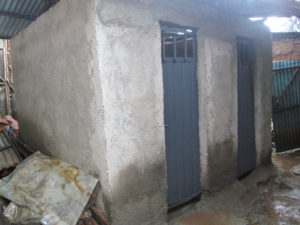
New latrines are humble but are in much better shape than before
We also identified 502 families with young children, whose immune systems are still developing, and provided them with safe water storage containers and treatment chemicals that purify water and protect the children from waterborne diseases. We held workshops, attended by all these families, to ensure that they fully understood how to use the tools, as well as proper hygiene and sanitation practices and how important they are.
To spread this knowledge among the broader community, ChildFund and the Woreda Health Office led a three-day training of 16 community volunteers and 25 health extension workers to provide education and assistance on hygiene and sanitation, as well as other health-related issues, throughout the community.
This part of the initiative was especially timely: Part of their work during those three days was to develop a health education plan tailored to the specific needs of the community itself, starting with educating families about acute watery diarrhoea and its transmission, symptoms and prevention.
As it happened, the community was on the brink of an acute watery diarrhoea epidemic that had already gripped parts of Addis Ababa. But the volunteers and extension workers were able to reach 4,261 households with the message of prevention, and woreda 7 escaped the outbreak.

Gulele community members learn how to purify water so it is safe to drink and use for washing
ChildFund, the volunteers and health extension workers and the Woreda Health Office also launched two community-wide hygiene and sanitation campaigns centred on community clean-up, with 200 participants.
We know that latrines and water purification supplies by themselves don’t make for a sustainable solution to a community’s water, sanitation and hygiene-related needs; sharing knowledge and support are integral to making the practices stick.
But the experience of living in a clean and safe environment — and the fact that they avoided a potentially deadly disease that swept through neighbouring communities — will most likely keep the families of woreda 7 on the path to a healthier (and more pleasant) future.
Christine Ennulat
ChildFund International
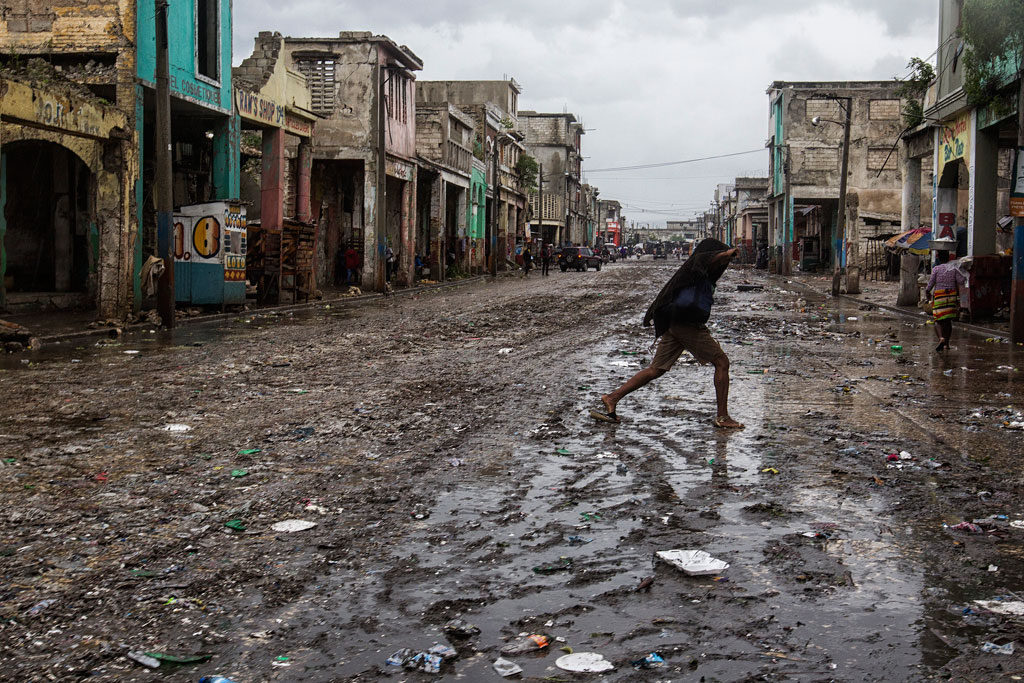
Hurricane Matthew has brought destruction to Haiti: Photo Credit UN
Dublin, October 11th, 2016: ChildFund Australia, CCF Canada
The most powerful Caribbean storm in nearly a decade has devastated parts of Haiti, leaving more than 350,000 people in need of assistance
On Tuesday 4 October, Hurricane Matthew – a Category 4 storm – struck the south-western peninsula of Haiti. The damage is expected to be significant, however, the assessment phase has only just begun due to severe weather conditions and lack of ground access.
According to the latest reports, more than 1,000 people in Haiti have died, with this figure expected to rise. Tens of thousands of displaced people throughout the country have been temporarily housed in 152 shelters, according to UNOCHA.
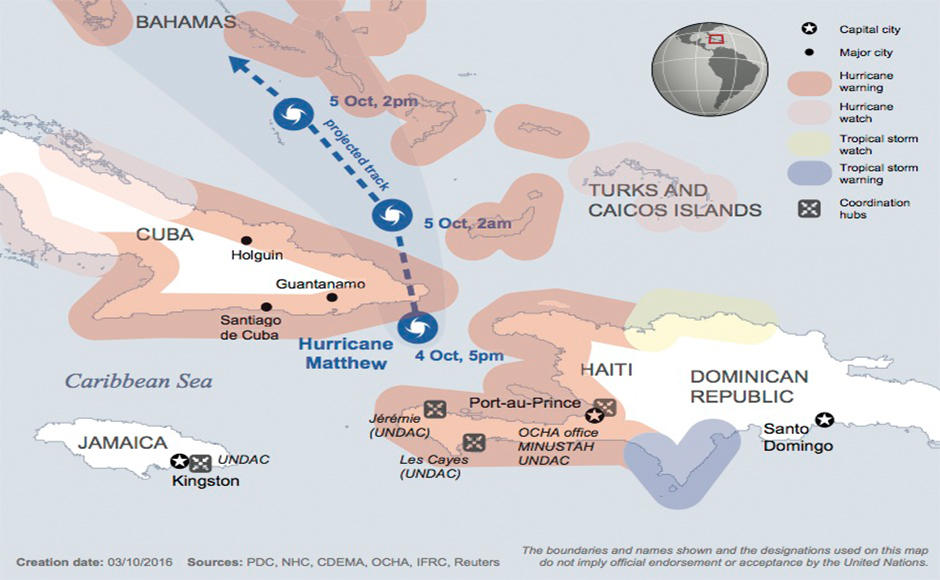
The path of Hurricane Matthew as it hit Haiti
UNICEF says more than 4 million children may be affected by the hurricane damage in Haiti, which has destroyed homes and schools, cut off roads and destroyed crops and farms.
ChildFund Alliance members are responding to the emergency in Haiti. CCF Canada is working with a local partner to provide food, water, first aid and mobile toilets, and will continue to monitor the situation to determine where help is most needed.
This update from CBC (Canadian Broadcasting Corporation) outlines the impact of the storm on the people of Haiti as the full extent of damage becomes clear
http://www.cbc.ca/news/world/haiti-hurricane-cholera-destruction-matthew-1.3798697
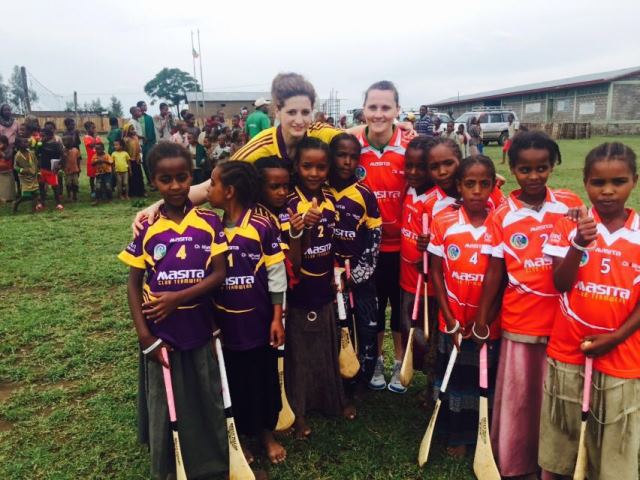
Mags and Aoife pose with local girls from Ropi, Ethiopia, April 2016 ahead of Africa’s first ever camogie game, captured on film by RTE Nationwide
As Chief Executive Officer of an NGO and a former Commandant in the Irish Defence Forces, I am someone who has had the privilege of travelling extensively over the course of my professional career. I have visited many countries and sampled many different cultures. I have also witnessed stark injustice, and the sometimes deplorable conditions that children in developing countries often have to endure. ChildFund aims to tackle many of these injustices by providing children in the communities where we work with a solid platform for their physical, cognitive and social development. Our approach is organic and needs-led. We work with local communities and partners on the ground to identify gaps in provision that disadvantage children. We endeavour to cultivate a nurturing environment where children’s rights are respected and they can aspire to safer, more fulfilling lives with genuine prospects for realising their hopes and dreams.

Mick, Mags & Aoife wearing honorary traditional dress- Ropi, Ethiopia, April 2016
In 2015 the Camogie Association selected ChildFund Ireland as it Charity Partner of Choice. I was personally delighted for ChildFund to partner with this wonderful organisation that has done so much for girls in Ireland and which is firmly rooted in local communities’ right across the country. That sense of connecting to communities both at home and abroad has been a very important element in the success of the partnership to date.
The main expression of the partnership thus far has been through the Dream Bike campaign. The aim of this initiative is very simple. It is about providing bikes to vulnerable girls in developing countries who have to travel very long distances to attend schools, spending hours away from the family home and exposed to potential dangers, often arriving at school exhausted. In such circumstances the decks are loaded against girls who can face an uphill task just to continue their basic education ,much less aspire to greater things. Through our Dream Bike campaign we can do something about that. Just €100 is enough to buy a bike and change a HUMAN life! Imagine, a hundred quid? The impact of this practical assistance to help girls secure their educational future might seem modest but to a girl in the developing world it can be hugely significant.
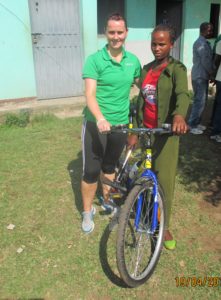
Aoife with one of the girls to benefit from the ‘Dream Bike’ initiative
As the partnership has developed, four of camogie’s brightest stars have become ambassadors for ChildFund, helping to promote our essential work in assisting disadvantaged children overseas and setting an incredibly positive example for young girls here in Ireland. In April this year, we had the pleasure of accompanying two of these ambassadors, Cork’s Aoife Murray and Wexford’s Mags D’Arcy, on an inspiring visit to see our work on the ground first hand. The trip provided both women with an opportunity to meet their sponsored children which, as you can imagine, was an emotional and profound moment. They were also present to witness the first batch of girls to receive bikes as a result of the Dream Bike initiative, a truly joyous event that created enormous excitement for the girls receiving bikes, their families, and the local community who came out in force to join us and to celebrate. Some of the girls had to be taught how to ride a bike!
I have travelled to Africa many times but rarely have I witnessed such a positive feeling as on this trip and been as inspired by the power of a simple gesture, such as the giving of a bike, to make such a big difference to a child who really needs it. The energy and enthusiasm shown by Aoife and Mags in supporting the partnership was and is infectious. Since returning they have given up much of their valuable free time to let people here in Ireland know exactly why the Dream Bike campaign is such a positive, life-affirming initiative, and why the camogie community and the wider public should take it to their hearts.
There is no denying that Aoife and Mags were hugely excited about the prospect of playing a game of camogie in Ethiopia – and we were just as excited to see this happen. To our knowledge, the first game of camogie to grace African soil! It was therefore a hugely proud and inspiring moment to see the U-12 girls from the Ethiopian village of Ropi kitted out in county jerseys, wielding the hurl and chasing the sliotar with great passion and enthusiasm across the lush green grass and blood red soil of an African village. Prior to the trip Aoife Murray had announced her retirement from the Cork County team but has since cited this moment in Ethiopia as being the catalyst for reigniting her passion and encouraging her to return to the “County, like”. Returned she has with a vengeance! Aoife will do battle for Cork at the 2016 Senior Finals in Croke Park on September 11th and I as a Déiseach will be cheering on the Rebels for the first time!!!
Adding to the excitement on the Ethiopia visit was the presence of Anne Cassin, her cordial producer Ann Marie O’Callaghan and cameraman Brian McVeigh from the RTE Nationwide team who were there to film the visit. It is hard to explain when you are present at a special moment…you can’t really explain it, you just sense it. Everybody there that day felt that same sense of witnessing something special, it was a unique cultural and sporting moment. That is why it gives me such joy to be able to share this privilege with you on Monday 5th September at 7pm when the programme airs on RTE 1 .
If you are a sports fan, if you are somebody of compassion who cares about the daily inequalities children have to endure, if you are someone who actively supports overseas development work or someone who is thinking about it, or if you are simply interested in the world at large and celebrate other cultures, we invite you to tune in, watch the programme and be inspired to support us in doing what we do best – offering children a helping hand so they can achieve their dreams.
Thank You…
Michael Kiely, CEO ChildFund Ireland.
September 1st, 2016
Find out the various ways you can support Dream Bike by visiting us at: http://www.childfund.ie/dream-bike/
Find out about our Child Sponsorship Programme by visiting us here: http://www.childfund.ie/sponsor-introduction/

Sizina proudly shows off the bike that will hugely assist her in being able to get to school regularly
Dublin; 30th May, 2016: Brian Mac Neill
Sizina is a cheerful 14 year old from Mozambique. Like many girls in developing countries, it can be a real challenge acquiring a good, regular education. One of the major reasons for this is the sheer distances that girls may need to travel daily just to get to school. Other family priorities, such as the need to source fresh water and carry it back to the home, a backbreaking chore that may in itself require walking several kilometres with heavy containers, can also hamper or disrupt schooling.
Imagine having to find the time and energy to carry out these essential chores, and then having to consider a long exhausting walk of up to several miles just to get to school and start your normal routine? Now imagine how much easier this would be if you were a child and you suddenly had the gift of a bicycle?
Sizina has been fortunate enough to be sponsored by a kind Irish sponsor from Co. Carlow since 2009. A long-time supporter of ChildFund Ireland, the donor was recently moved to provide Sizina with the full cost of a bicycle.
Sizina is beaming in because this gift has made a significant difference to the quality of her daily life. To a girl like Sizina, a bike can mean liberation, not just from the exhaustion of long journeys on foot, but from the the constraints of time; affording her an element of independence and giving her the confidence to see through her education. Importantly, It can also help limit girls like Sizina from exposure to hazards and dangers that might be involved in lengthy trips away from the family domicile, such as the threat from wild animals or even from people traffickers.

Sizina on the bike bought for her by her Irish sponsor
Sizina is bright and she has very firm ideas about what she wants to do in life;
“I would like to be a teacher. I chose this profession because I will get to teach the children what I am learning and I will be respected in my community”.
Sizina lives 7km away from her school and the bike provided through her sponsor’s act of generosity will make an enormous difference to her life. As a sponsored child however Sizina is also assisted in a variety of ways. The ChildFund sponsor programme that has helped her has also helped everyone in her community too. In a letter to her sponsor she says;
“through your contribution and one of the other sponsors’ in my community, other children and I study in classrooms built through your support”. In our classrooms, we have desks also bought through your support…we received water purifiers to prevent cholera and malaria, and mosquito nets to help prevent malaria.”
Sizina has time for chores and can still get o school thanks to the bike
Talking about the difference the bicycle has made to her life. She says; ”now I can see the difference from the time I did not have with a bicycle…now I can get up, wash the dishes, sweep the yard and then go to school”.
The Irish donor who sponsors Sizina and paid for the gift of this bike wishes, as do many of our supporters, to remain anonymous. She did however offer up some personal reflections on what the child sponsorship programme means to her;
“I like the fact that the modest regular amounts really go to the child I sponsor, and her family and community at times like Christmas, and although contact is infrequent in my case with the language barrier, it clearly makes a huge difference to the whole project. I feel the personal contact through people such as your good self in the office in Ireland, is very reassuring.”
Many sponsors have a deeply personal relationship with their sponsor child and their family. What they frequently tell us is that it can be a hugely rewarding and uplifting experience to be involved in supporting the life of a vulnerable child; offering them a helping hand on the pathway to a happy, productive life.
Please visit our dedicated child sponsor page and find out more about the programme. Create your own story by intervening in the life of a child who really needs your support. http://www.childfund.ie/sponsor-introduction/
Recognising the importance and material benefit of providing bikes for girls in the developing world, ChildFund launched its Dream Bike campaign in 2015, as part of our partnership with the Camogie Association of Ireland. The campaign seeks seeks to help girls get to school safely and on time so that they can educate themselves to their full potential and get the best opportunity to improve their lives as they develop into adulthood. Please visit our dedicated campaign webpage and find out how you can support this wonderful initiative. http://www.childfund.ie/dream-bike/
Thank you
ChildFund Ireland


